 yardie's reggae collection - artist page
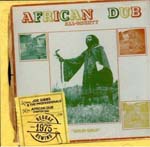
JOE GIBBS (b. 1945 - † 2008) AFRICAN DUB ALL MIGHTY - CHAPTER ONE * * * *
Joe Gibbs (born Joel Gibson in 1945 in Montego Bay) got involved in the Reggae business in 1967 when he financed some sessions for Lynn Taitt's band with Lee Perry supervising them. He formed a new label called Amalgamated. Soon followed some Rocksteady hits, including Perry's "I Am The Upsetter". Gibbs built his own studio in Duhaney Park, and in the meanwhile he kept selling records from his 32 Beeston St. shop. By mid 1968 Joe worked with Winston "Niney" Holness, and when Winston quit he emplyed the great engineer Errol Thompson who was coming from Randy's Studio 17. Years later Joe and Errol became "The Mighty Two": a duo of friends and producers. In the meantime Perry and Holness were bringing new sharp ideas. Thompson became a pioneer of Dub when he worked on Clive Chin's "Java Java Java Java" (aka "Java Java Dub") in 1973. Two years later Gibbs opened his new studio in Retirement Crescent. Thompson kept working with him and in the meantime releasing cuts for his own Errol T label. From 1975 Gibbs with Thompson had some good success with Dubs built over Studio One and Treasure Isle old classics. The latter had two huge competitors: King Tubby and Prince Jammy. But he deserves a high status among the engineers and therefore inside the Jamaican music. So here in 1975 comes "African Dub All Mighty - Chapter One". With a huge bucket of Studio One and Treasure Isle material to pick up from and employing The Professionals, Thompson created some interesting Dubs spiced by the emerging new "Rockers" sound. For sure this set and the following "African Dub All Mighty - Chapter Two" helped to spread Dub in Jamaica and in the UK. It must be also said that these sets confirmed how the Rocksteady rythms could be manipulated again to achieve new musical shapes. These Dubs come from material as different as that from The Techniques, Jackie Mittoo, Burning Spear, Ken Boothe, Delroy Wilson, Errol Dunkley, Sound Dimension, Dennis Brown, The Jamaicans, Bob Andy, Soul Vendors and Soul Syndicate. The musicians that played on these tracks are many: there were some members of the Soul Syndicate, some musicians that would become Lloyd Parks' We The People band, and many that when working together were called The Professionals. Must be also remembered some great talents of the horn session. Among the others there was Tommy McCook, Dean Fraser, "Dirty Harry" Hall and Vin Gordon. The man responsible for the music presented here is of course Errol Thompson, who engineers and mixes. The alchemy brought by the encounter of old classic rythms with the skills and musical visions of Thompson created some very interesting landscapes. Here there is a good part of technical aspects that make the set working properly, but most importantly are Errol's ears and heart that make the difference. Check the originals and than go back to this set: this is very very good (and almost melodic) Dub.
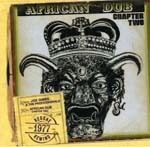
AFRICAN DUB ALL MIGHTY - CHAPTER TWO * * * /
A couple of month aftrer "African Dub All Mighty - Chapter One", The Mighty Two came back with a second chapter. This is not a straight follow up to the first chapter, since here the majority of the Dubs get more edgy. Here The Professionals are formed by less musicians than the previous set. Here the band is reduced to the bone. Here they are: on drums : Santa Davis, on bass : Fully Fullwood, on rhythm guitar : Tony Chin, on keyboards : Leroy "Horsemouth" Wallace, on horns : Dirty Harry, Tommy McCook and Bobby Ellis. Again the sources come from old Rocksteady classics, and to be more precise from: The Techniques, The Paragons, Alton Ellis, The Melodians, The Wailers, Bob Andy, The Heptones, The Soul Brothers and The Cables. So the inspiration is the same but the way in which the originals are approached at the end it delivers some quite different results. We could say that the ingredients are the same as in the first chapter, but the recipe and therefore the result is sometimes different. Again the engineer is Errol Thompson and the mixes were controlled by him and Joe Gibbs.
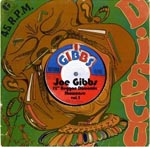
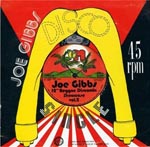
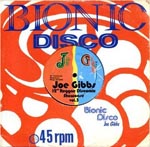
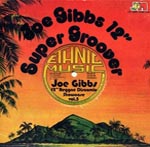
12" REGGAE DISCOMIX SHOWCASE VOL. 1 * * * *
The "12" Reggae Discomix Showcase" five discs collection presents fiftyfive (!) discomixes produced by Joe Gibbs and Errol Thompson ("The Mighty Two") between 1977 and 1982. The material was recorded and mixed at "Joe Gibbs Recording Studios", 24 Retirement Crescent, Kingston 5, Jamaica. Errol Thompson recorded and mixed the tracks. The list of the personnel employed includes Lowell Charles "Sly" Dunbar, Carlton "Santa" Davis and Leroy "Horsemouth" Wallace (drums), Lloyd Parks, George "Fully" Fullwood and Robbie Shakespeare (bass), Eric "Bingy Bunny" Lamont, Lennox Gordon, Winston "Bo Peep" Bowen and Tony Chin (guitar), Ossie Hibbert, Franklyn "Bubbler" Waul, Errol "Tarzan" Nelson and Harold Butler (keyboards), Bobby Ellis (trumpet), Herman Marquis (alto sax), Vin Gordon (trombone), Tommy McCook (tenor sax), Uziah "Sticky" Thompson and Ruddy Thomas (persussions). Maybe not all the tracks are stellar but for sure if we consider the whole five discs compilation we must admit that it is unmissable. The 12" discomix songs provide a strong wide dynamic range, they are between six and seven minutes long, and of course their format presents the original version followed by their deejay, toaster or dub counterpart. It is not easy to approach the 12"s in the context of a reviews site as yardie-reggae.com. Should we consider the original and its version as separate entities, or just appoach them as a whole as the 12" actually is? The latter is the obvious choice, but in some cases the original or its counterpart particularly shine above the other. In these cases we choosed to highlight the best part in red text color trying to consider it as a single production, even if we all know that the 12" is a single entity. What is sure is that the 12" demostrated the immense versatility of Reggae. If the originals could have been declined endlessly, their deejay, toaster or dub versions offered even far wider musical territories to be explored. This is the material collected in volume one: "Feeling Soul" - Ruddy Thomas & Trinity (1977); "My Man / Blouse And Skirt" - Marcia Aitken & Trinity (1977); "How Can I Leave You / Bubbling Love" - Dennis Brown & Prince Mohammed (1978); "Just Like A River" - Mighty Diamonds & Ranking Joe (1978); "Hello Carol / Yapa Yah" - Enos McLeod & Killer Brown (1979); "Win Them / News Carrier" - Leo Graham & I-Roy (1979); "Riding For A Fall / Gi Mi One A Fi Yuh Girl Friend" - George Nooks & Welton Irie (1979); "Yuh Jamming So / Green Bay Killing" - Madoo & Kojak (1979); "I Was In Love / I Pray Thee" - Beverly Bailey & I-Roy (1977); "Cool Out Son / Nice Up The Party" - Junior Murvin w/ Welton Irie & Prince Weedy (1979); "Natty Contractor / Drunken Master" - Michael Black & Ranking Joe (1980).
12" REGGAE DISCOMIX SHOWCASE VOL. 2 * * * /
This is the material collected in volume two: "Tribal War / Jah Did It" - George Nooks & Prince Weedy (1979); "Friday Evening" - Joe Tex, U Black & Welton Irie (1980); "Joe Grine / Serve Mi Long" - Madoo & Welton Irie (1980); "Rope In / Love In A Jamdown" - Cornell Campell & Lui Lepke (1980); "Two Timer / Video Man" - Cornell Campbell & Trinity (1980); "When I Think Of You" - Ruddy Thomas (1980); "More Than I Can Say / Lover Man Style" - J.C. Lodge & Shorty The President (1980); "Jah Guide" - Naggo Morris (1980); "Praise Him / Babylon Happening" - Horace Andy & Jah Mike (1979); "Innocent Blood / Rock It Up" - Culture & U Brown (1981); "Good To Be There / Jah A The Magician" - Chalice & Puddy Roots (1981).
12" REGGAE DISCOMIX SHOWCASE VOL. 3 * * * *
This is the material collected in volume three: "I'm Not A Queen / Duck Boy" - Marcia Aitken & Trinity (1978); "Everyday Is Just A Holiday / Natty Dead On The Go" - Ruddy Thomas & Trinity (1978); "Windy Day / What A Windy Day" - Ruddy Thomas & Trinity (1979); "On The Mountain Top / Can't Keep A Good Man Down" - Donovan Chambers & Trinity (1981); "My Princess / Get Up And Skank" - Sammy Dread & Lee Van Cliff (1981); "Boxing Around / Look How She Fat" - Cornell Campbell & Lee Van Cliff (1981); "Tourist Season / Island In The Sun" - Barry Brown & U-Mike (1980); "Virgin Girl / Lovers Take Cover" - Eek-A-Mouse & Lui Lepke (1981); "Dancehall Stylee / Step Mother" - Danny Mangaroo & Lui Lepke (1982); "Sadie / Fe Mi Time Now" - George Nooks & Papa Tulllo (1981); "First Tight Loving / Hugging And Kissing" - Freddie McGregor & Shorty The President (1982).
12" REGGAE DISCOMIX SHOWCASE VOL. 4 * * *
This is the material collected in volume four: "Dreadlocks Time / Fist to Fist" – Junior Byles w/ Kojak & Liza (1979); "I Can’t Stand The Rain / Same Complaint" – Hortense Ellis W/ Price Weedy (1979); "Your Man" – Dennis Brown (1979); "Natty Dread She Want / Pain A Back" – Delroy Melody & Trinity (1979); "Sky Juice" – Hugh Griffiths w/ Kojak & Liza (1980); "Shake Your Body Down To The Ground" – Ruddy Thomas & Welton Irie (1980); "Don’t Stop Till You Get Enough" – Derrick Lara & Trinity (1980); "My Love/ Can’t Take Mi Landlord" – Wade Brammer & Lui Lepkie (1980); "Working My Way Back To You" – George Nooks & Trinity (1980); "Why Girl / Did We Have To Part" – Earth & Stone w/ Trinity (1980); "After You / Love Me Forever" – Wayne Wade & Trinity (1980).
12" REGGAE DISCOMIX SHOWCASE VOL. 5 * * *
This is the material collected in volume five: "Ring Craft /Dreader Mafia" – Earth & Stone w/ Snuffy & Wally (1980); "Su Su Pon Rasta / Stop Su Su Pon The Dread" – Naggo Morris & Trinity (1980); "Burn Babylon / Don’t Trouble Natty Dread" – Sylford Walker & Trinity (1980); "Let The Power Fall / Give I Power" – Carl Brown & Prince Mohammed (1980); "Time Stiff / Time so Rough" – Junior Murvin & Trinity (1980); "Sweet Sensation / Sweet Drum & Bass" – Carol Gonzales & Paddy Roots (1981); "Being With You" – Ruddy Thomas w/ Joe Tex & U-Black (1981); "Playmate aka Bum Ball / Scorcher" – Home T. Four & Delroy Jones (1981); "Dreadlocks Girl / She Never Love Me" – Sammy Dread & Tappa Zukie (1982); "Captain Selassie / Under Me" – Icho Candy & Errol Scorcher (1982); "The Man In Me / Loving Galore" – Junior Vibes & U-Mike (1982). |
 1975 - 17 North Parade - studio - discs: 1
 1976 - 17 North Parade - studio - discs: 1
 1977-1980 - VP - studio - discs: 1
 1979-1981 - VP - studio - discs: 1
 1978-1982 - VP - studio - discs: 1
 1979-1980 - VP - studio - discs: 1
 1980-1982 - VP - studio - discs: 1